
A lasting interior finish is decided before the first coat goes on. When comparing interior painters Hamilton homeowners can rely on, surface preparation matters as much as colour and application. A smooth, consistent result depends on sound surfaces, well-coordinated repairs and a clear understanding of the work ahead.
Painting should fit around household routines, with a clear scope and a plan for connecting plaster repairs to the finished walls. Martin Painting provides interior painting alongside interior plastering and GIB stopping across Hamilton and the wider Waikato, bringing preparation and finishing together under one project scope.
This guide explains what thorough preparation can involve, how sheen and colour choices affect the final appearance, and what to look for in project delivery from planning to completion. It also covers how to assess workmanship and why repairs matter before painting begins. Martin Painting’s five-year workmanship warranty and 100% satisfaction guarantee provide added accountability, alongside careful preparation and precise application.
Key Takeaways
- A complete interior repaint follows a clear sequence: assess surfaces, prepare them, apply paint and inspect the finish.
- Use a structured preparation process to identify repairs and surface defects before painting begins.
- When comparing interior painters Hamilton, compare the scope, preparation, finish expectations and workmanship accountability, not just broad descriptions.
- Plan room access and belongings in advance. Sequencing work can help keep essential areas available in an occupied home.
- Martin Painting coordinates interior painting with plastering and GIB stopping across Hamilton and the wider Waikato, with a five-year workmanship warranty and 100% satisfaction guarantee.
Interior painters in Hamilton: what a complete painting project covers
Interior painting involves assessing and preparing surfaces, applying coatings and inspecting the completed finish. A complete repaint accounts for each stage rather than treating paint application as the whole job. For a general overview of what a complete painting project covers, preparation and surface treatment are recognised parts of a painter’s work.
For interior painters Hamilton residents engage, the appropriate scope depends on the rooms involved, how they are used, the condition of existing surfaces and the finish requested. A living area with sound walls may need less preparation than a hallway with scuffs, patched areas or uneven texture. The work required should be identified before painting begins.
Which Hamilton interiors benefit from professional painting?
Professional painting can refresh a lived-in home, prepare a property for a change in use, complete a renovation or maintain a commercial interior. In Hamilton homes and Waikato properties, worn, marked or uneven walls may need cleaning, filling, sanding or other preparation before they are ready for paint. The condition of the surface, not just the room’s size, helps determine the work involved.
Repainting addresses existing interior surfaces, while renovation work may also require repairs to the plasterboard beneath them. Cracks, damaged GIB or uneven joints may need plastering or GIB stopping before painting. Applying paint over unresolved defects won’t correct them, and they may remain visible beneath the new finish.
What belongs in a well-defined painting scope?
A useful scope records which rooms and surfaces are included, such as walls, ceilings, doors or trim. It also sets out preparation, application and final inspection, and distinguishes repainting from repair work. This makes the sequence and responsibility for surface readiness clear. Room use and the requested finish help guide decisions about preparation and application.
- Assessment: review the surfaces, existing coatings and visible defects.
- Preparation: protect adjacent areas and ready surfaces, including agreed repairs.
- Application and inspection: apply the specified finish and check for consistency and missed areas.
Martin Painting provides interior painting alongside interior plastering and GIB stopping across Hamilton and the wider Waikato, so surface repairs and finishing work can be coordinated. A dedicated guide to interior plastering and GIB stopping can help explain how those repairs prepare walls and ceilings for paint.
How Hamilton interior painters prepare surfaces for a consistent finish
Preparation involves assessing and protecting surfaces, making repairs and conditioning each area for painting. The amount of work depends on the substrate, existing coating, surface condition and finish required. A clean, sound and suitably even base supports a consistent result and paint adhesion.
Surface assessment, protection and repair
A methodical preparation sequence starts before paint is opened:
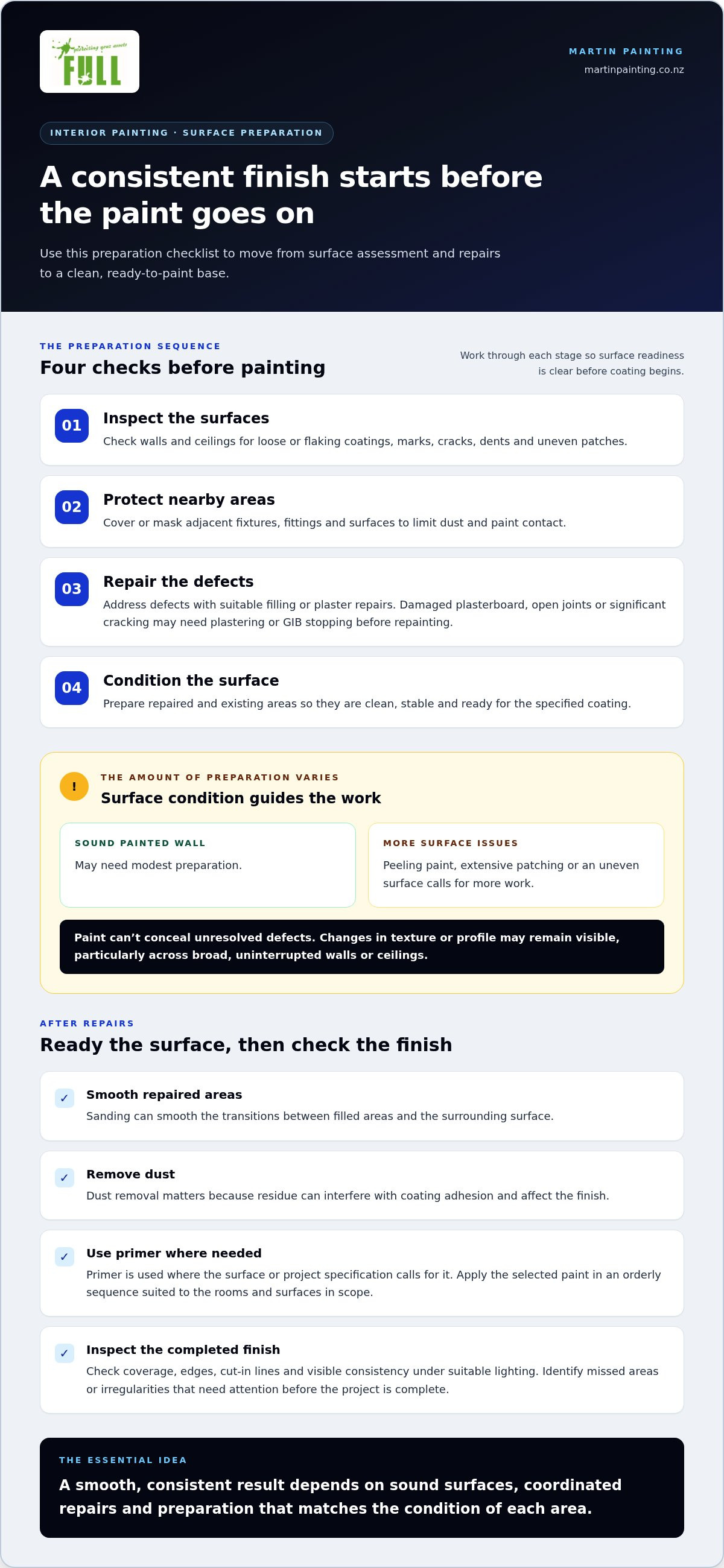
- Inspect: look for loose or flaking coatings, marks, cracks, dents and uneven patches across walls and ceilings.
- Protect: cover or mask adjacent fixtures, fittings and surfaces to limit dust and paint contact.
- Repair: address defects with suitable filling or plaster repairs. Damaged plasterboard, open joints or significant cracking may need plastering or GIB stopping before repainting.
- Condition: prepare repaired and existing surfaces so they are clean, stable and ready for the specified coating.
The right treatment varies by surface. A sound painted wall may need modest preparation, while peeling paint, extensive patching or an uneven surface calls for more work. Paint can’t conceal unresolved defects. Changes in texture or profile may remain visible, particularly across broad, uninterrupted walls or ceilings. For general background on renovation and paint safety, the US Environmental Protection Agency outlines lead-safe work practices for its own regulatory context. This is US guidance, not a statement of New Zealand requirements.
From prepared surface to final coat
Once repairs are complete, sanding can smooth the transitions between filled areas and the surrounding surface. Removing dust matters because residue can interfere with coating adhesion and affect the finish. Primer is used where the surface or project specification calls for it. The selected paint is then applied in an orderly sequence suited to the rooms and surfaces in scope.
Final inspection checks coverage, edges, cut-in lines and visible consistency under suitable lighting. It is also the opportunity to identify missed areas or irregularities that need attention before the project is complete. Ceiling cracks need careful assessment before repainting. A dedicated ceiling crack repair guide can help explain why repairs belong before the finish coats.
For Hamilton homes and commercial interiors, coordinated interior painting, plastering and GIB stopping can carry the work from surface repair through to the finished coat. Explore Martin Painting’s interior painting for an overview of the service.
Choosing interior painters in Hamilton: compare scope, finish and workmanship
Comparing interior painters Hamilton homeowners are considering is more useful when you assess each project against the same criteria. Broad descriptions such as “full repaint” can cover different rooms, repairs and finish expectations. A like-for-like scope makes those differences visible and sets a shared standard for the completed work.
| What to compare | What a clear scope should describe | Martin Painting |
|---|---|---|
| Scope | Rooms and surfaces included, plus any exclusions or repair work. | Residential and commercial interior painting across Hamilton and the wider Waikato. |
| Surface preparation | Preparation matched to the existing surface, with repairs identified before painting. | Interior plastering and GIB stopping can be coordinated with painting work. |
| Finish expectations | The intended appearance and finish for each surface, including walls, ceilings or trim where included. | Finish requirements are considered as part of the interior painting project scope. |
| Workmanship accountability | How completion is assessed and what workmanship commitments apply. | Projects are backed by a five-year workmanship warranty and a 100% satisfaction guarantee. |
How to assess preparation and finish standards
Preparation should reflect the condition of each surface. Sound walls may need less repair than surfaces with cracks, peeling coatings or uneven patches. A clear scope distinguishes these requirements instead of assuming every room needs identical treatment. A smooth appearance is not the only measure of a suitable finish: the agreed result should reflect the room’s use and the finish specified for each surface. A separate guide to paint sheens for high-wear interior walls can help clarify how sheen affects the final appearance.
For a like-for-like comparison, check that each scope includes the same rooms, surfaces, repair responsibilities and application stages. A headline description alone won’t show whether plaster repairs are included or treated as a separate part of the project.
What workmanship accountability looks like
A clear scope and completion checks give the project team and property owner a reference for the agreed work. They help distinguish an outstanding repair or omitted surface from a difference in finish expectation. Martin Painting’s interior painting and plastering capabilities support coordinated project delivery when wall or ceiling repairs need to be completed before paint application.
The five-year workmanship warranty and 100% satisfaction guarantee provide stated accountability for Martin Painting’s projects. Alongside a defined scope and agreed finish expectations, these commitments set a clearer standard from preparation through to completion.
Planning an interior painting project in an occupied Hamilton home
Painting while a home remains in use calls for clear room-by-room planning. Agreeing which spaces are being worked on, how occupants will move around them and where belongings need to be shifted can reduce avoidable disruption. The sequence depends on the property and agreed scope, so the plan should reflect household routines without promising a fixed duration.
Preparing rooms before painting begins
Before work starts, occupants can clear small, movable items and arrange access to the surfaces included in the project. Discuss larger belongings and fixed fittings as part of the room plan so protection and access requirements are understood. Technical preparation, such as surface repairs, sanding or paint-ready treatment, belongs in the agreed work scope rather than being assumed as a household task.
Identify priority rooms and access constraints early. For example, note whether a bedroom needs to remain usable, which route connects essential areas, or whether a room contains items that need extra care. This gives the painting sequence a practical basis and helps clarify where temporary changes to normal routines may be needed.
- List the rooms and surfaces included in the project, and identify essential spaces that need planned access.
- Clear small items from work areas and discuss larger belongings or fixtures that affect access.
- Share access constraints, priority rooms and household routines before the sequence is set.
- Follow the agreed instructions for room access and drying while work is under way.
Coordinating work across rooms
Sequencing rooms can help preserve access to essential areas while painting progresses elsewhere. The order may depend on how rooms connect, which surfaces are included and how the household uses each space. In some homes, completing one area before moving to the next may be practical. Other layouts or repair requirements may call for a different approach. The agreed scope and property conditions determine the staging.
Follow the project team’s instructions about when painted rooms can be entered or used again. Drying and access guidance supports an orderly handover between work areas and helps avoid contact with surfaces before they are ready. An occupied-home repainting timeline guide can provide further context on planning stages without assuming every household or project follows the same timetable.
For a Hamilton home, a defined room sequence, clear access arrangements and agreed preparation responsibilities make the work easier to organise around daily routines. Plan your interior painting project with Martin Painting.
Martin Painting: interior painting and plastering in Hamilton
Martin Painting provides residential and commercial interior painting across Hamilton and the wider Waikato. For property owners comparing interior painters Hamilton, the combination of painting, interior plastering and GIB stopping supports a coordinated approach, from assessing surface condition to completing the finish.
A coordinated approach to interior surfaces
A consistent finish starts with properly prepared surfaces. Where walls or ceilings have damaged plasterboard, cracks or uneven joints, interior plastering and GIB stopping can be coordinated with the painting work so repairs are addressed before paint application. This connects the condition of the substrate with the completed surface, rather than treating repair and painting as unrelated stages.
The project process follows the agreed scope and the surfaces involved. Preparation and repair requirements are considered alongside the requested finish, followed by paint application and attention to edges and visible details. The work is shaped by the property, helping residential and commercial clients understand how surface repairs and finishing fit together.
Request an interior painting quote in Hamilton
A useful project quote reflects the property, the rooms and surfaces included, the requested finish and any agreed plastering or GIB stopping. These details establish a clear basis for the work and align expectations about preparation and completion. Martin Painting’s projects are backed by a five-year workmanship warranty and a 100% satisfaction guarantee.
Hamilton and Waikato property owners planning an interior repaint can request an interior painting quote from Martin Painting. A defined scope brings the project requirements into focus before work begins.
Plan your interior repaint with confidence
A lasting interior finish depends on a clear scope, sound preparation and workmanship suited to the condition and use of each room. Comparing interior painters Hamilton property owners are considering is easier when you know which surfaces are included, how repairs are coordinated and what finish is expected. For homes and commercial properties, planning room access in advance can also help keep the project organised around daily use.
Martin Painting provides residential and commercial painting and plastering across Hamilton and the wider Waikato, including Cambridge, Te Awamutu and Putaruru. The company brings interior painting, plastering and GIB stopping together where a project requires coordinated surface work. Projects are backed by a five-year workmanship warranty and a 100% satisfaction guarantee.
Start with a clear understanding of your rooms, surfaces and finish priorities. Request an interior painting quote from Martin Painting to set out the project scope and take the next step towards a considered, consistent finish.
Frequently Asked Questions
How do I choose interior painters in Hamilton?
Compare interior painters Hamilton homeowners are considering by the work included, preparation approach, finish expectations and workmanship accountability. Check that the scope identifies rooms and surfaces, notes required repairs and explains how completion will be assessed. A headline description such as “full repaint” may not cover the same work from one project to another. Martin Painting provides residential and commercial painting across Hamilton and the wider Waikato, including Cambridge, Te Awamutu and Putaruru.
What preparation should interior painters complete before painting?
Preparation should match the condition and type of each surface. It commonly involves inspecting for loose coatings, marks, cracks and uneven areas, protecting adjacent surfaces, completing agreed repairs, then sanding and removing dust. Primer may be required depending on the surface and project requirements. These steps create a suitable base for paint application. Painting over unresolved damage won’t correct the underlying defects or produce an even surface.
How long does interior painting take in a Hamilton home?
The time required depends on the rooms and surfaces included, their condition, the amount of repair and preparation, and how the work is staged. A repaint involving sound walls may have different requirements from one that includes plastering or GIB stopping. Drying and access requirements also affect the sequence. Martin Painting scopes residential projects around the property and agreed work, rather than relying on a fixed duration for every Hamilton home.
Can interior painting and GIB stopping be completed as one project?
Yes. Martin Painting provides interior painting alongside interior plastering and GIB stopping, allowing these stages to be coordinated within a project. Where damaged plasterboard, cracks or uneven joints need repair, the work can be planned before paint application so the finish is applied to prepared surfaces. The agreed scope sets out which rooms, repairs and painted surfaces are included in the Hamilton or wider Waikato project.
How should I prepare an occupied home for interior painting?
Clear small items from the rooms and surfaces included, and identify priority spaces, household routines and access constraints. Discuss larger belongings or fixtures that affect access as part of the project plan. Room sequencing can help maintain access to essential areas while work progresses elsewhere. Follow the painting team’s instructions about room access and drying, and leave technical preparation and repairs within the agreed work scope.
What is covered by Martin Painting’s workmanship warranty?
Martin Painting’s projects are backed by a five-year workmanship warranty. This provides a stated commitment to workmanship, alongside the company’s 100% satisfaction guarantee. The warranty is specific to workmanship, and no further coverage terms should be assumed from its duration alone. For a residential or commercial painting and plastering project in Hamilton and the wider Waikato, the agreed scope sets out the work being undertaken.
Can interior painters work on commercial interiors as well as homes?
Yes. Martin Painting provides interior painting for residential and commercial properties across Hamilton and the wider Waikato, including Cambridge, Te Awamutu and Putaruru. Commercial interiors can involve different room uses, access needs and project scopes from a home repaint, so the work is planned around the surfaces and requirements agreed for the property. Interior plastering and GIB stopping can also be coordinated with painting where the project requires surface repairs.